
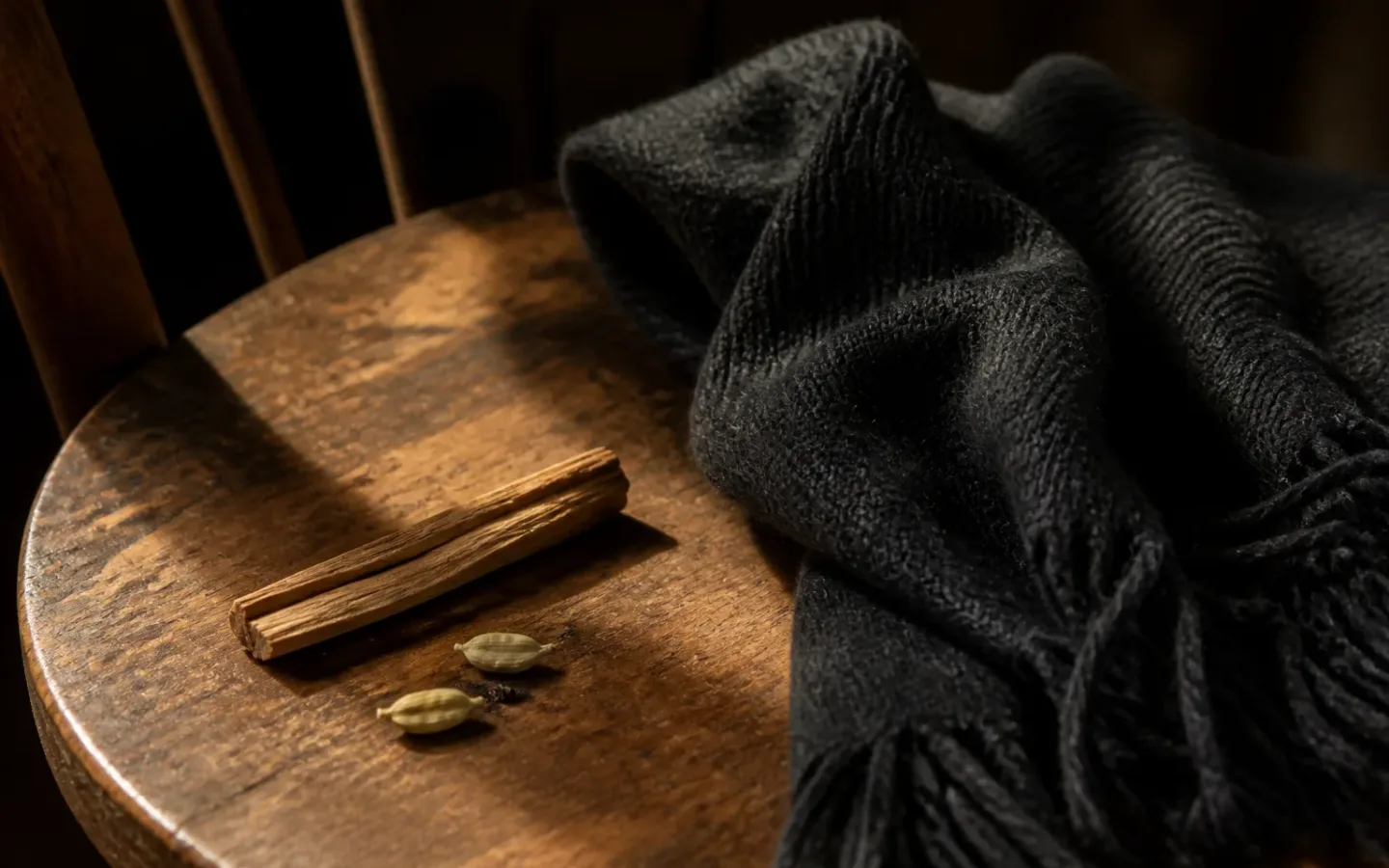
The name Cashmeran prepares the reader for a soft sweater. The actual material has more personality: amber wood, spices, earth, dark fruit, pine, and a discreetly animalized facet can appear at the same time.
It is precisely this mixture that made it useful. IFF describes it as diffusive, spicy, long-lasting and capable of reinforcing florals, with nuances of powder and velvet. It is not cashmere transformed into essence. It is a molecule whose name communicates part of the tactile sensation it can create.
Soft doesn't mean clean
Cashmeran may be comfortable, but it's not necessarily a musk in laundry. There's warmth, shade, and a little roughness. Think of fabric stored near wood, spices, and fur—not a white towel fresh out of the machine.
In different doses and combinations, it can deepen a woody scent, warm flowers, or create an almost body background. This versatility explains why it appears in styles presented to the public as feminine, masculine, or genderless.
The nose also perceives surfaces
When we talk about texture in perfumery, we don't say that the nose touches. The brain translates certain smells into tactile experiences: dry, velvety, rough, creamy. Cashmeran is a good material to perceive this bridge.
That matters when buying. Two woody fragrances can have similar notes and opposite finishes. One feels straight and dry; the other, enveloping and fuzzy. The list of notes hardly tells this story alone.
Test the finish
Compare a clear woody with one described as warm, spicy, or musky. After an hour, ignore the names of the notes and write down only surface sensations: smooth, dry, dusty, soft, moist, or warm.
If Cashmeran is present, don't force identification. First recognize the effect. Many molecules reveal themselves better by what they do with the fragrance than by a standalone signature.