

The fougère family was born from a perfume that did not attempt to reproduce the smell of a fern. Fougère Royale, created by Paul Parquet for Houbigant in the nineteenth century, proposed an imaginary vegetation with aromatic freshness, softness and shade.
The plant that didn't need to provide the aroma
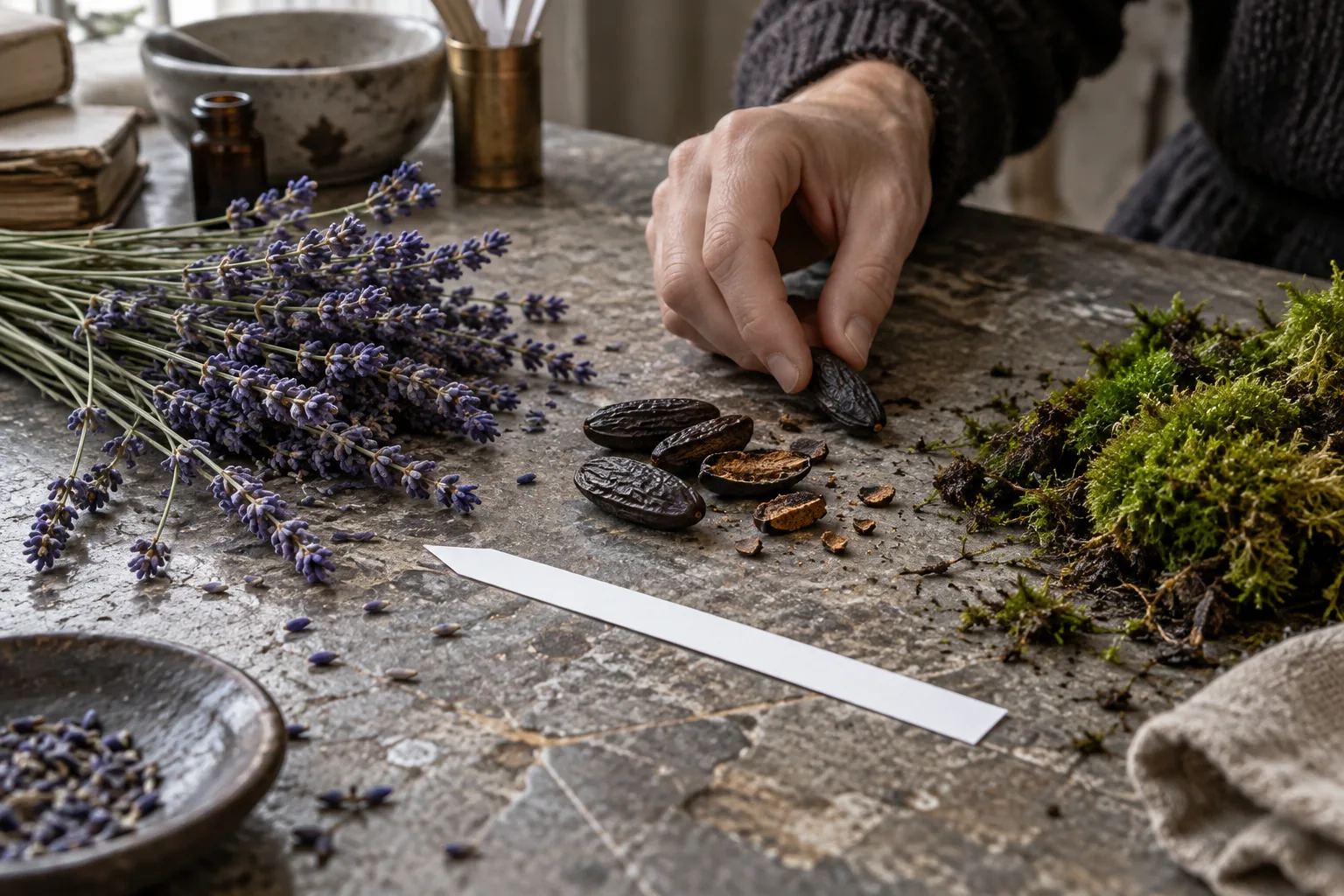
"Fougère" means fern in French. The plant, however, does not deliver by extraction the chord that came to bear its name. The classic effect usually brings together lavender, coumarin and a mossy or woody base. It is a landscape created by composition, not a botanical photograph.
1882 or 1884?
Houbigant itself dates Fougère Royale of 1882. The Musée International de la Parfumerie records 1884 in its chronology. As institutional sources diverge, it is more correct to make the difference visible. The important consensus is the place of creation in the 1880s and its pioneering use of coumarin.
Fougère does not describe a harvested plant. He describes an idea of nature built into the bottle.
From invention to bathroom cabinet
Throughout the twentieth century, the fougère design became especially present in men's perfumery and shaving products. This created a collective memory: clean lavender, herbs, foam, wood, and a slightly sweet background. Many people recognize the atmosphere before they know the name.
Recognize without memorizing formula
Start by looking for contrast. Does the opening look fresh and aromatic, while the background gains warmth from hay, tonka, or wood? Is there a sense of self-care without the smell being limited to soap? These clues are more helpful than requiring a fixed list of notes.
Compare a classic fougère to a contemporary aromatic. Smell both again after half an hour. If the second step reveals a soft, shaded, and discreetly sweet base, you've probably found the architecture that was born out of that impossible fern.