You don't have to be born with a "perfumer's nose". You need to learn to pay attention.
This difference changes everything. A trained nose is not necessarily one that smells aromas invisible to the rest of the world. Often, it is the nose that knows how to compare, save references and find words for a sensation that was already there.
Start with what already lives in your memory
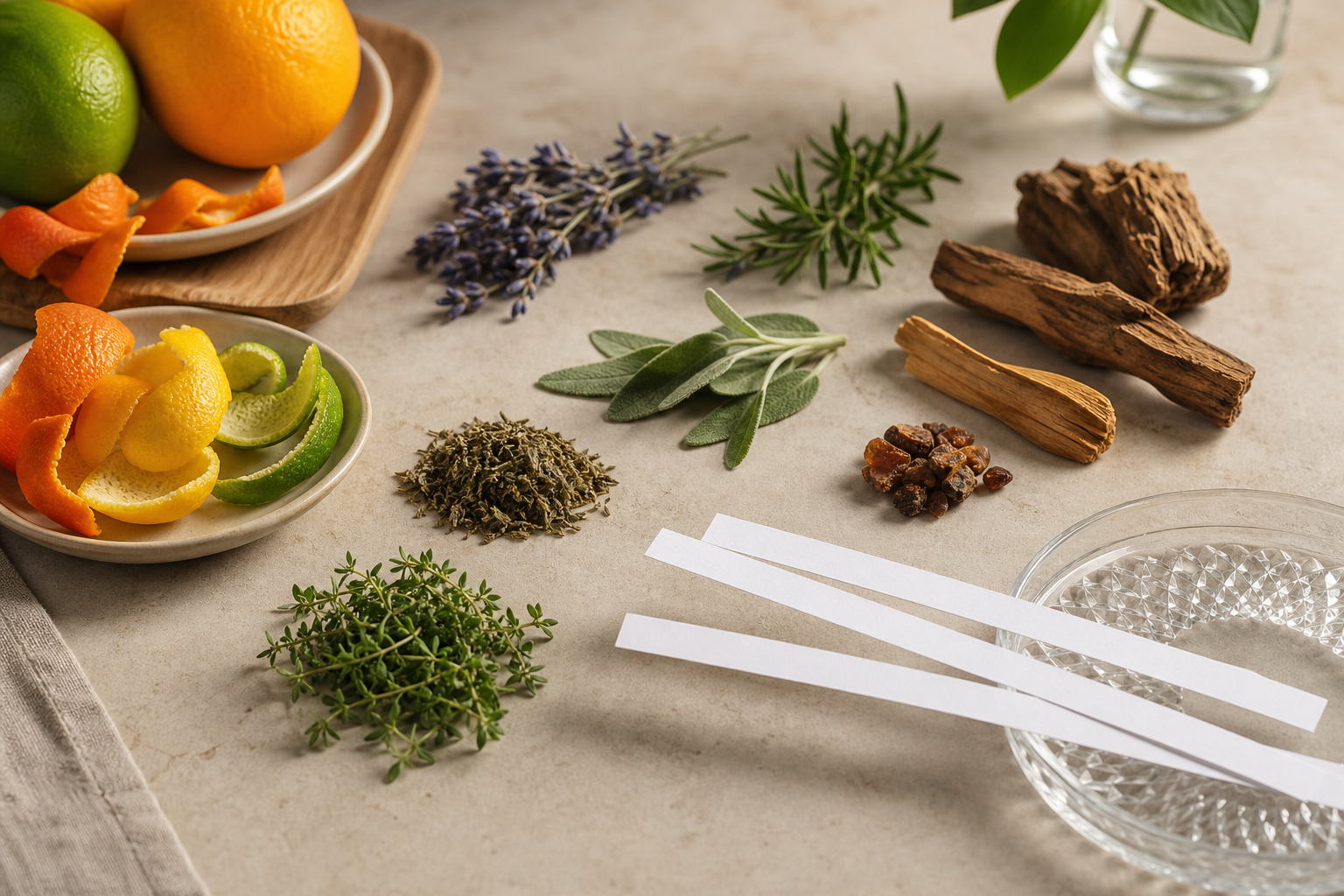
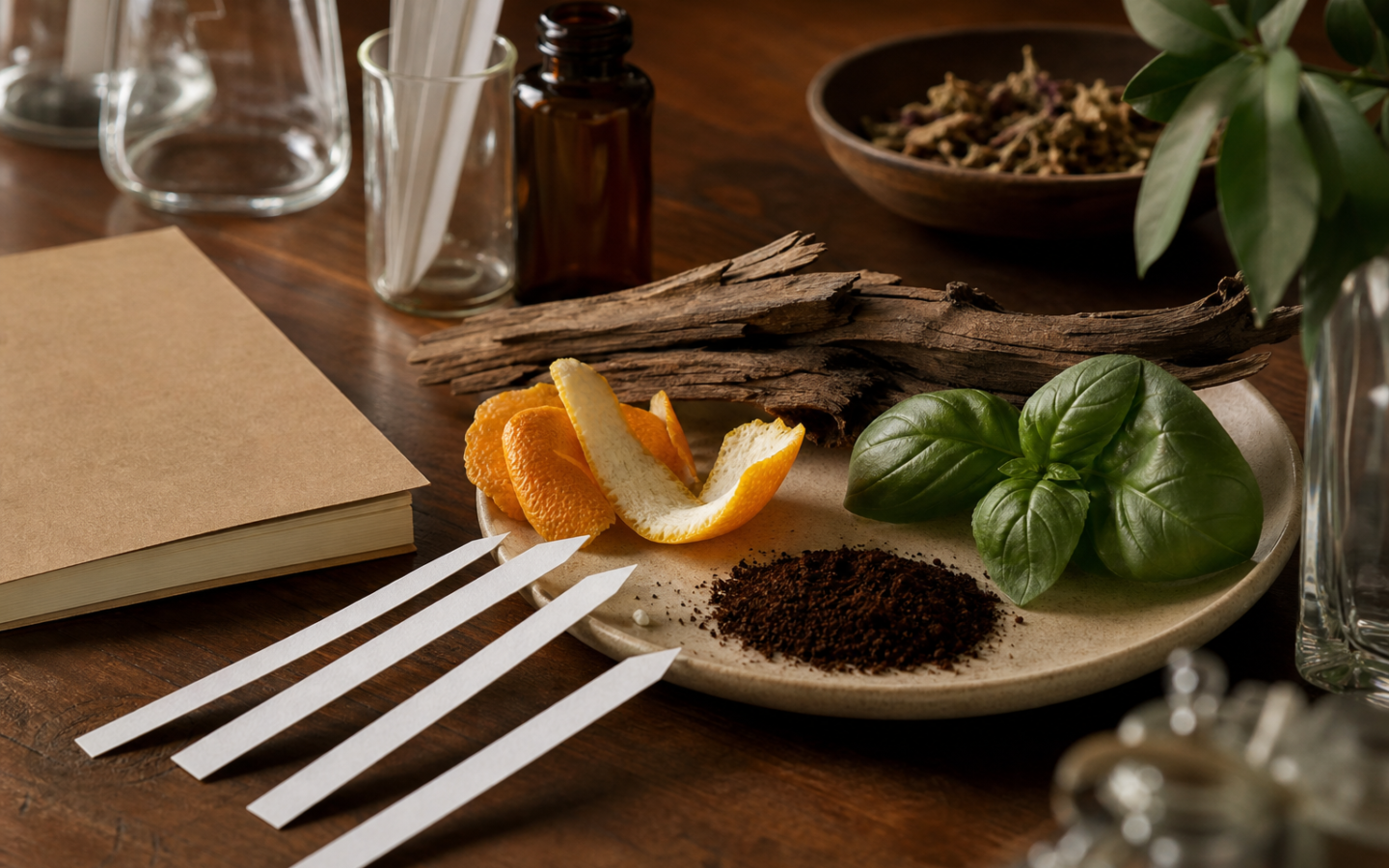
Open the kitchen. Zest a lemon peel, mash a basil leaf, and smell some ground coffee. At another time, look for dry wood, damp soil, or a clean garment.
Don't try to guess molecules. Record three things: intensity, feel, and recall. Does lemon feel shiny or rough? Is the leaf wet or dry? Does coffee resemble roasting, smoking, or chocolate?
!Separate everyday references for olfactory training
Science helps explain why this habit works. Identifying, discriminating, and naming odors involves perception, memory, and language. Studies of olfactory training show improvement above all in identification and discrimination tasks. This doesn't turn a home practice into clinical treatment, but it does confirm a useful idea: Repeated attention can improve performance.
One smell at a time is more than enough
The most common mistake is to set up a table with twenty references on the first day. The enthusiasm is short-lived. The memory receives more information than it can organize and everything starts to seem vaguely "smelly".
Choose three related references. Three citrus, for example. Compare lemon peel, orange, and bergamot, if you have access. The following week, use herbs. Then, woods.
The goal is not to guess names blindly. It is to notice differences.
First, orange may appear rounder. Lemon, sharper. Bergamot may bring bitterness and a floral shade. These words are provisional. The important thing is that they are yours.
The method of the three encounters
In the first contact, feel without reading anything. Write down what appeared.
In the second, consult a reliable source and compare the technical vocabulary with your perception. Perhaps "earthy" is the word used by the industry for what you called a basement or wet vessel.
On the third date, return to the reference without looking at the notes. What remained in your memory?
This sequence avoids two extremes: feeling only what the description told you to do and rejecting all shared language. Your nose gains autonomy without being isolated.
Perfume also needs repetition
Use the same perfume on different days. Once on the tape, once on the skin. Test it in the morning and, if it makes sense, in a different climate. Not to look for a "true" version, but to separate what belongs to the fragrance from what came from the environment and your attention that day.
When you return, follow movements: did it open citrus and become woody? Did the sweetness grow? Did a note that seemed central quickly disappear?
Training the sense of smell is building familiarity. There is no medal for feeling ten notes in five minutes. There is a better reward: perfumes that were once similar begin to follow different paths.