
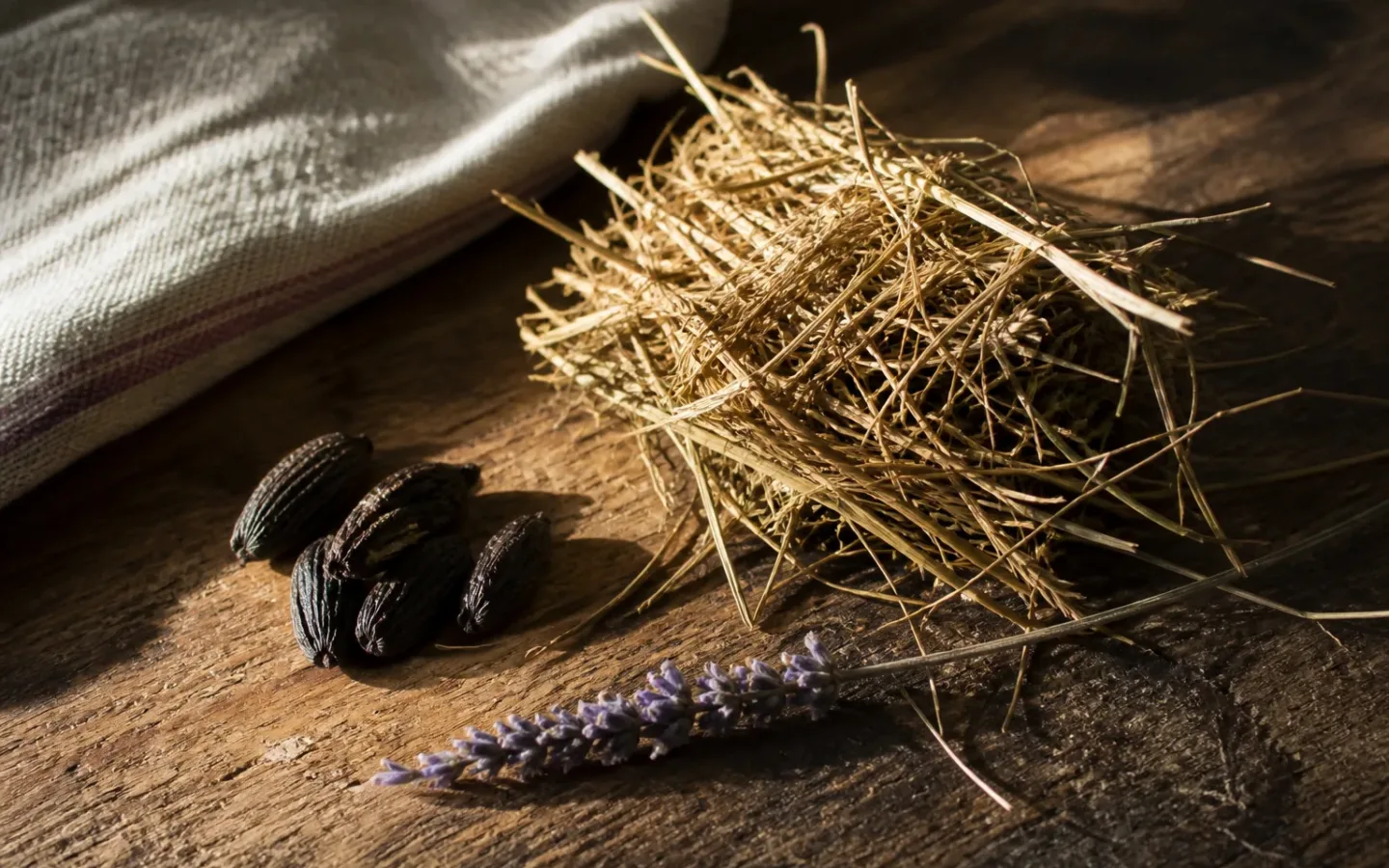
There is a kind of sweetness that doesn't resemble dessert. It seems to come from heated straw, almonds, light tobacco, and cut grass that has dried in the sun. This is coumarin territory.
The molecule occurs naturally in materials such as tonka bean and can also be produced synthetically. Its scent helped change perfumery in the nineteenth century and became the centerpiece of the fougère accord: luminous lavender above, warm coumarin below, mosses and woods completing the structure.
The fern that got a smell
Fougère means "fern" in French, but the chord does not reproduce the odor of the plant. It creates a fantasy. Coumarina participates precisely in the most ingenious part of this invention: it makes the lavender leave the garden and find a dry, sweet and shady base.
It is curious to think that an entire family was born from an imagined landscape. Today, the design appears in classic fragrances, shaving products and much more transparent contemporary interpretations.
Sweet, but not necessarily gourmand
In a noticeable dose, coumarin can resemble tonka, hay and almond. With vanilla, tobacco or resins, it gets warmer. Alongside lavender and herbs, it gains an aromatic contrast.
This helps not to confuse "sweet" with "edible." A fragrance can have coumarin and still look dry, elegant, or green. To choose better, look at whether the sweetness resembles sugar or dried plant material.
Bridge the gap with the kitchen — without tasting anything
Smell a tonka bean only if you already have a safe reference suitable for aromatic use; do not ingest the material as exercise. A simple alternative is to compare dry hay, black tea and a fougère perfume.
Return to the scent after 30 minutes. Look for the meeting between lavender, herbs, and an almond-shaped background. It is at this cross that coumarin usually teaches the most.