
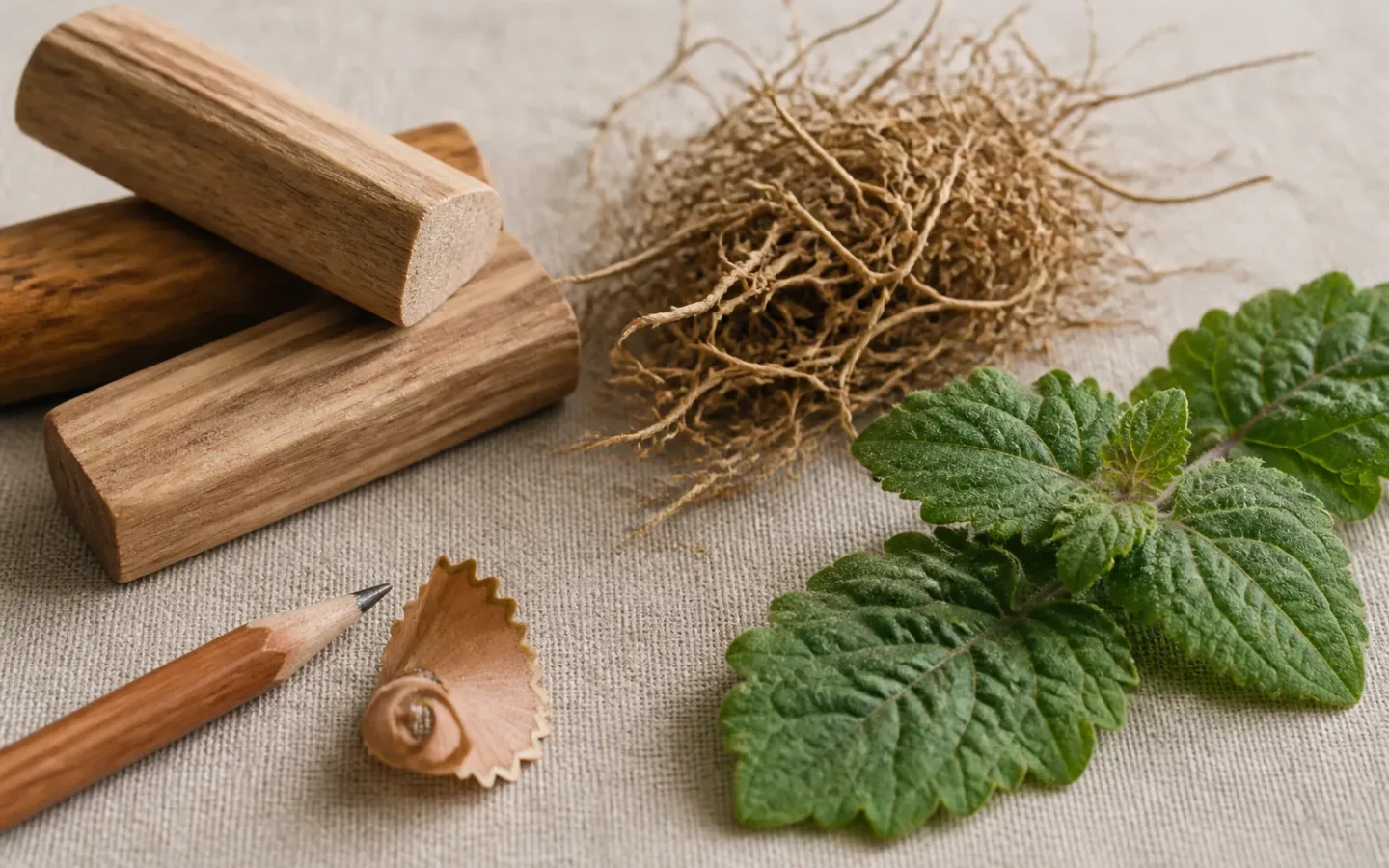
A woody perfume doesn't have to smell like a board. The family brings together constructions in which woods and the effects associated with them define the structure: dry, creamy, earthy, smoky or almost transparent.
Cedar may resemble freshly sharpened pencil. Sandalwood suggests a polished, milky surface. Vetiver brings root, earthiness, and dryness. Patchouli can deepen the set with dark moisture. Molecules like Iso E Super have further broadened this territory.
Madeira also has temperature
Some compositions feel cold and mineral. Others resemble wood heated by the sun. Spices, resins and amber increase heat; citrus and aromatics open up space and clarity.
That's why "woody" alone says little. Ask: dry or creamy? Light or dark? Smooth or rough? Close to the skin or expansive?
The family left the bottom
For a long time, woods were described primarily as support. Today they can carry the entire fragrance from the first spray. Modern materials create presence without necessarily bringing weight.
To choose better, look at whether you like wood as a discreet finish or as a protagonist.
Make a reference trio
Compare a sharpened pencil, a piece of dry wood without varnish and damp soil in a vase. They are not perfume raw materials, but they create useful references. Then test cedar, vetiver and patchouli in different fragrances.
When the nose learns to separate dryness, roots, and moisture, "woody" ceases to be a generic box.