
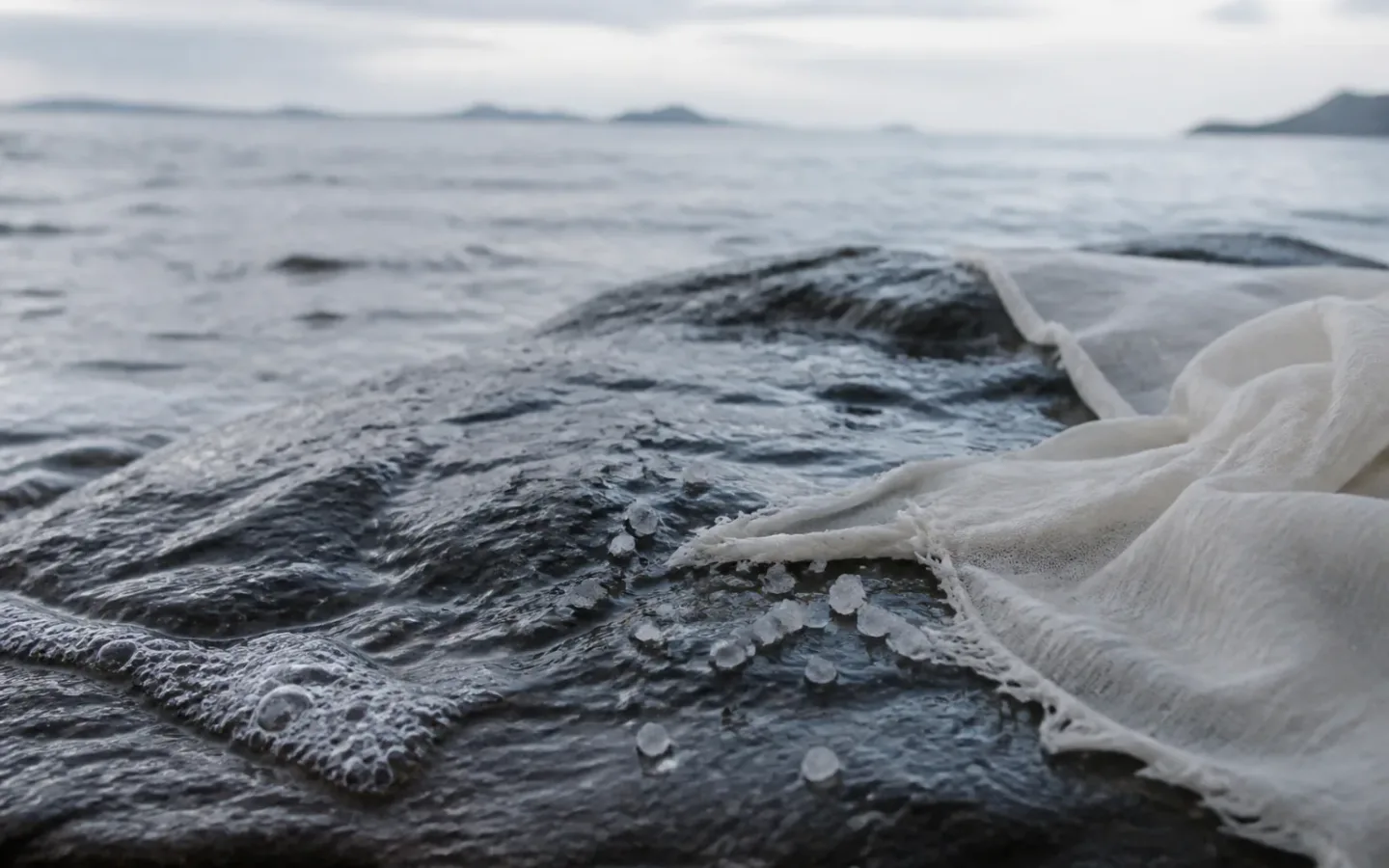
Aquatic perfume is not distilled seawater. The family was born from the ability to build a landscape: salty breezes, wet clothes, fresh melon, air after the rain or the blue transparency that advertising has taught to recognize.
The water offers almost no smell to extract
The aroma of the beach comes from algae, minerals, organic matter, humid air, sunscreen and memory. To bring this feeling to the bottle, the perfumery uses chords.
Calone has become an emblematic molecule of this universe, with marine and melon facets. She does not work alone. Citrus, transparent florals, musks, light woods and ozonic notes change the landscape.
Marine, aquatic and ozonic meet, but they are not identical
Marine points more directly to shore, salt, and algae. Aquatic can suggest clean water, rain, or transparency. Ozone resembles electric air, wind, and space.
In practice, the borders are mixed. The important thing is to observe which image dominates.
Freshness does not guarantee discretion
Some aquatic ones project quite a lot and persist for hours. The clear feel can make the scent feel light, although its structure is tenacious. Others stay close to the skin like a damp shirt drying.
If you associate aquatic only with the 1990s, it is worth testing contemporary creations: salt, minerals and woods have returned relief to a family that was once reduced to "blue".
Compare three types of imagined water
Try a marine perfume, an ozone perfume and a watery floral without looking at the notes. Write down which one resembles salt, rain, melon, clean fabric or cold air. Refer to the descriptions later.
You will not be identifying water. You will be recognizing the tools used to suggest it.