Natural is not synonymous with a whole plant placed inside the perfume. Between the lavender in the field and the oil used in a formula there is harvesting, transport, extraction, quality control and, often, a chain of people that begins far from the great capitals of perfumery.
The smell can come from unexpected parts
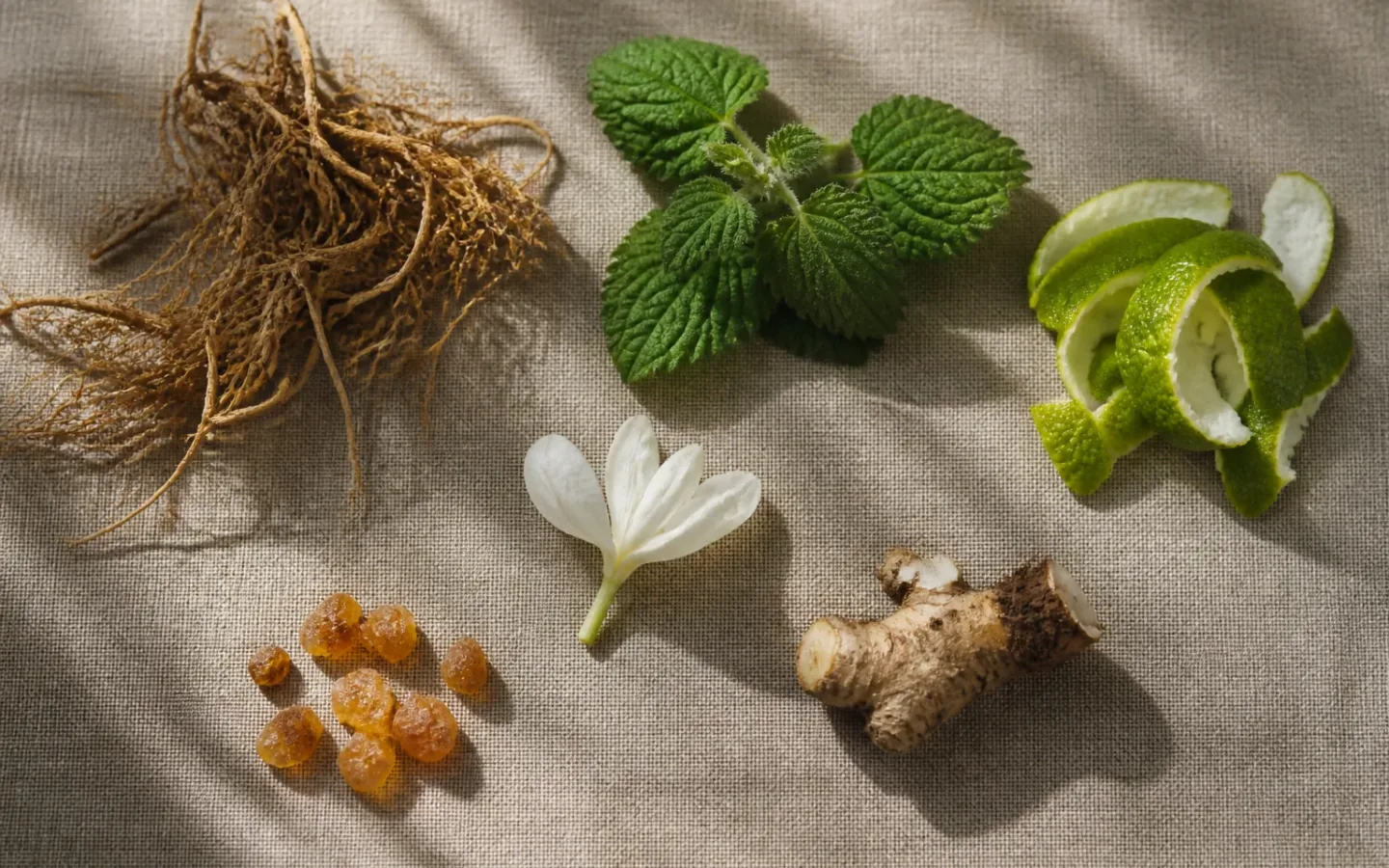
From the rose and jasmine, the flowers are of interest. From the bergamot, the bark. From vetiver, the roots. From the iris, the rhizome. From the patchouli, the leaves. Frankincense, myrrh and benzoin arrive as resins.
Each part holds a complex combination of molecules. Therefore, an essential oil is not a single substance. It is a natural mixture whose composition can vary.
The same plant does not always produce the same smell
Soil, climate, altitude, botanical variety, time of harvest and processing method leave marks. Think of coffee: two beans of the same species can reveal different profiles depending on origin and roasting. In perfumery, a more herbal lavender and a softer one are still lavender, but they do not deliver exactly the same sensation.
This variability is part of beauty and also an industrial challenge. Batches need to be analyzed and, when necessary, combined or adjusted to maintain a certain quality.
Extraction chooses what will be heard
Steam distillation, bark expression, solvents, and supercritical CO₂ do not draw exactly the same picture of the plant. Heat can favor or harm certain components. A solvent reaches materials that water does not carry. The result can be essential oil, absolute, CO₂ extract, or other preparation.
In other words: knowing the species is not enough. It is also important to know which part was used and how the aroma came out of it.
Natural is not automatically better, safe, or sustainable
This is perhaps the most useful surprise. A natural material can cause sensitization, require a large amount of soil, vary between seasons, or depend on a vulnerable chain. A synthetic material can be more stable and reduce pressure on a species — but it also has production impacts that need to be evaluated.
The responsible choice does not fit in a simple dispute between "good nature" and "bad laboratory". Safety depends on substance, dose and use. Sustainability requires looking at cultivation, energy, yield, traceability and social conditions.
How to perceive a natural without falling into a trap
Do not try to prove by the pyramid that a particular extract was used. The note list describes an impression and may represent a reconstructed chord.
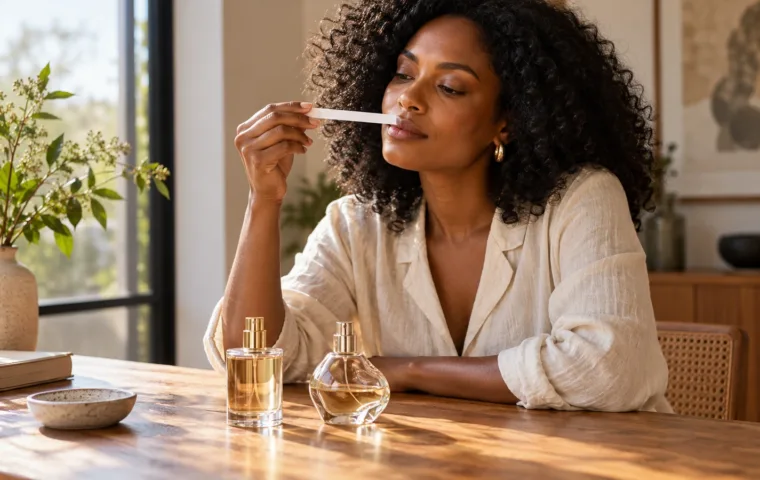
Instead, compare two materials sold for olfactory training—for example, lavender essential oil and a lavender base. Feel on separate ribbons and look for variation, roughness, sweetness, and duration. The goal is not to pick a winner. It's to perceive different paths to a similar idea.