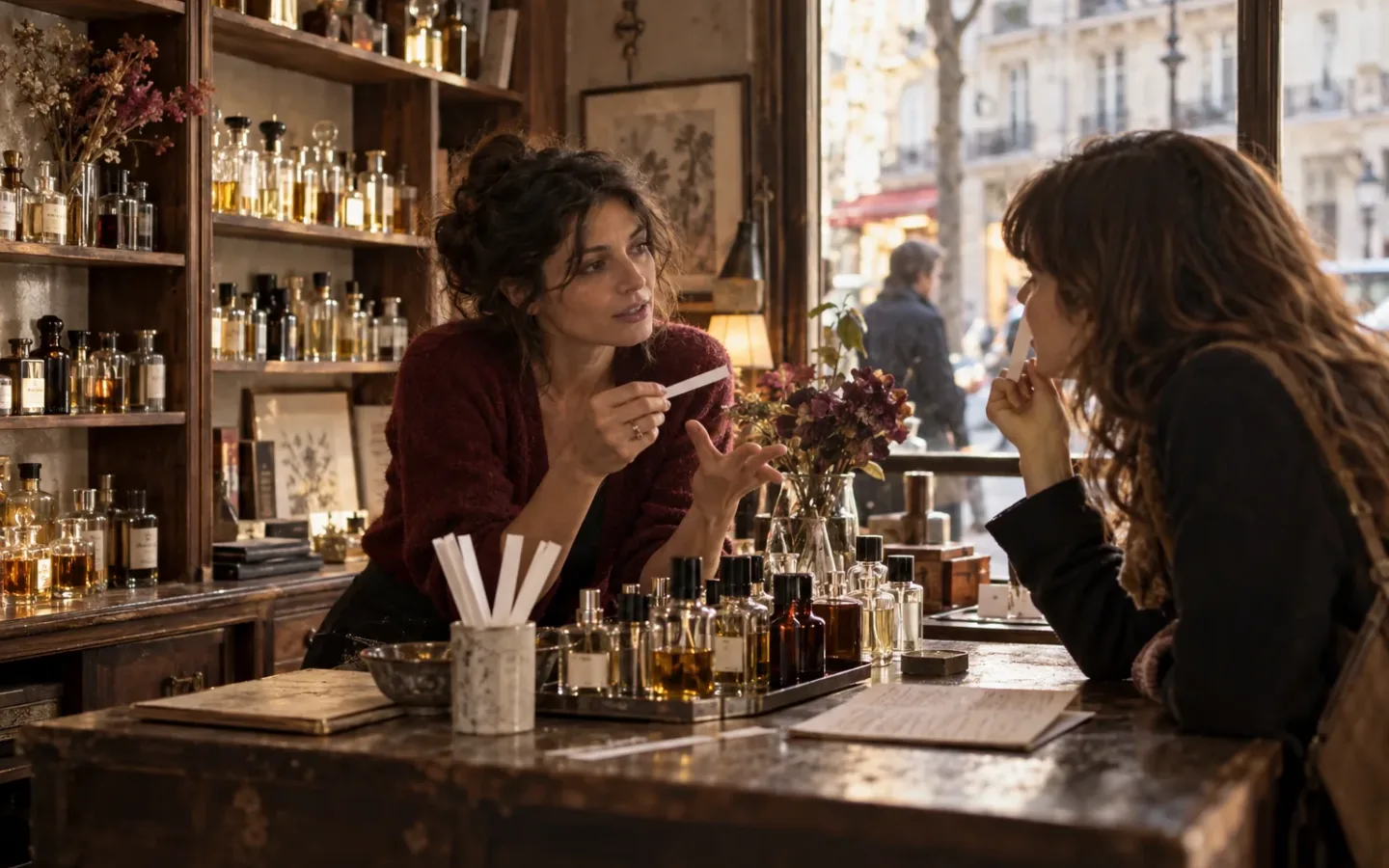
Niche perfumery was not born in a single day, nor does it simply mean expensive perfume. The idea took shape when smaller houses started to put the olfactory proposal at the center of the business, speaking to an audience willing to look for something outside the broader circuit.
A store before a category
In 1961, three friends opened Diptyque on boulevard Saint-Germain, in Paris. The space mixed fabrics, objects and travel references; perfumes would come later. In 1976, Jean Laporte founded L'Artisan Parfumeur, pointed out by the house itself as a pioneer of the modern niche. Mûre et Musc, from 1978, showed how a seemingly simple idea — blackberry and musks — could build a signature.
Creative freedom, but also market
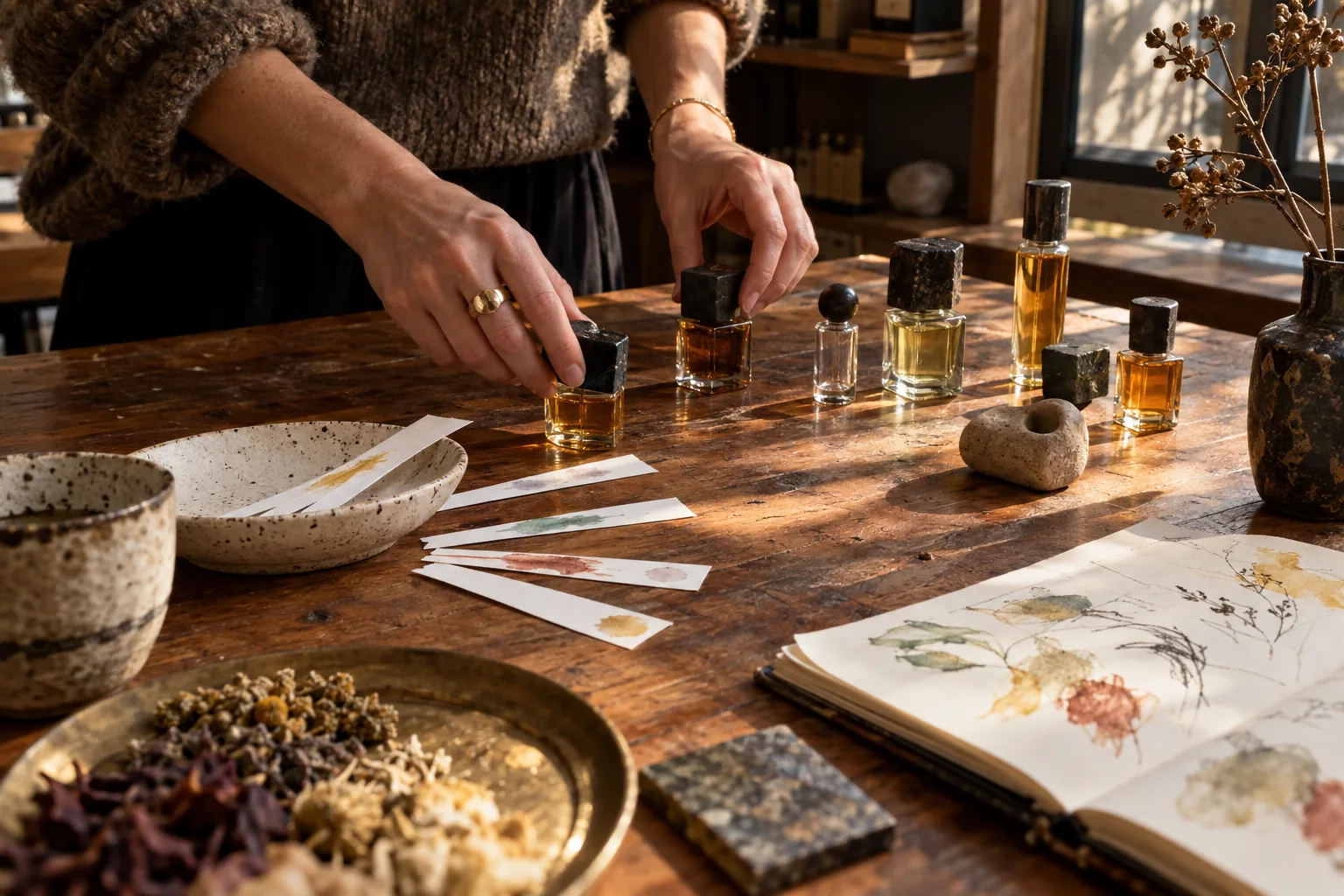
Osmothèque includes among the pioneers Diptyque, L'Artisan Parfumeur, Annick Goutal, Serge Lutens and Patricia de Nicolaï. They did not smell the same way. The common point was another: recognizable authorship, more selective distribution and space for themes that could seem risky in mass releases.
Today, "niche" covers small companies, international groups, and brands with a large reach. Therefore, the label does not prove quality, originality, or performance. It describes a market position that has become more complex with success.
The test that really matters
When you find a perfume sold as a niche, leave the prestige of the category out for a few minutes. Ask: Is the idea clear? Does evolution sustain interest? Would I wear this or just admire the story? This small filter protects the pocket and gives the decision back to the nose.