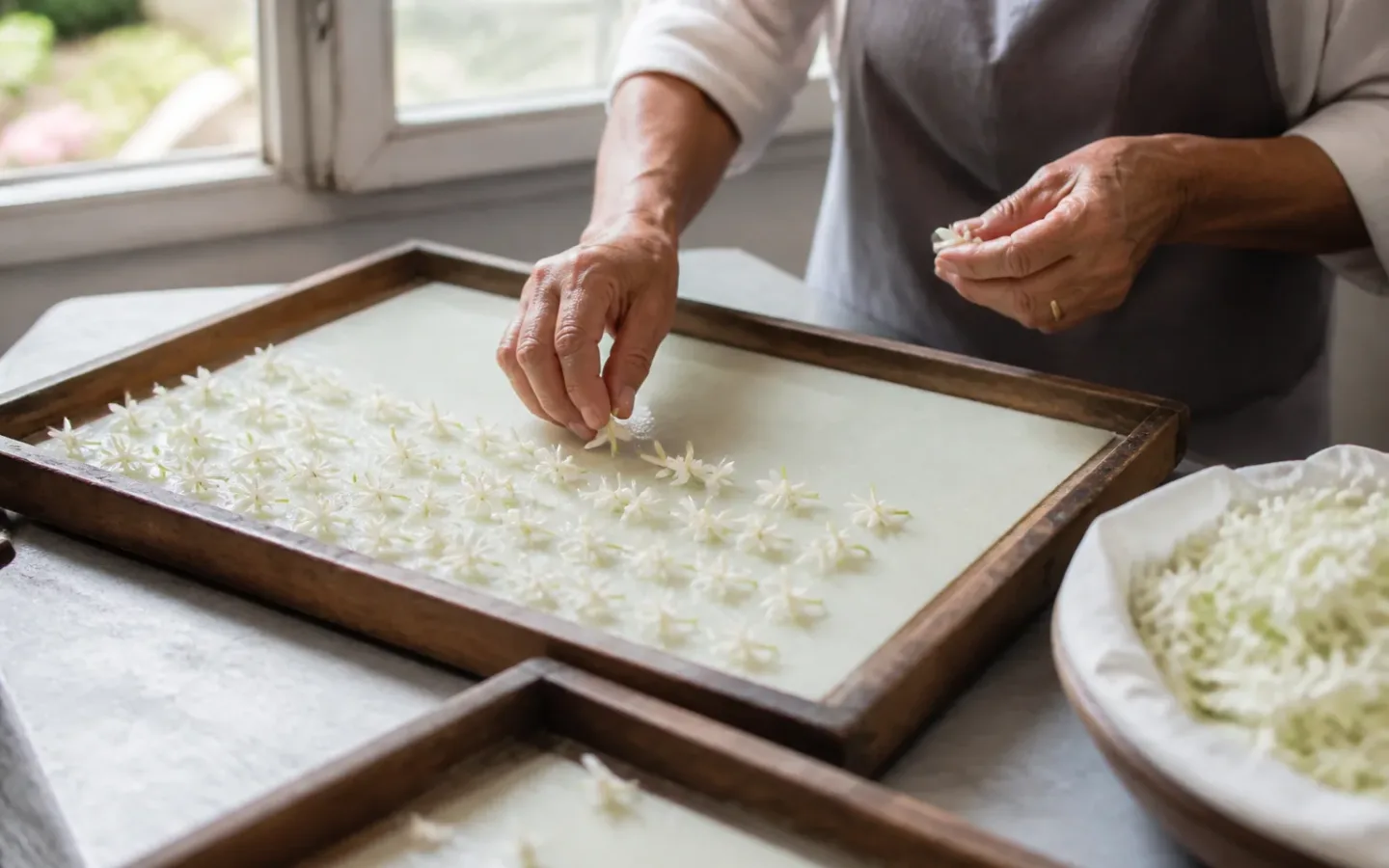
Before modern laboratories extracted the smell of delicate flowers, petals were placed on a layer of fat. Gradually, the fat absorbed its scent. Tired flowers gave way to fresh flowers, again and again, until that almost invisible surface carried a valuable aromatic concentration.
This process is enfleurage.
A patient technique
In cold enfleurage, fresh flowers were distributed on plates covered with fat without a marked smell. After a certain period, they were replaced. The fragrant fat was called pommade. The aromatic material could then be separated with alcohol.
There were also methods with heated fat, suitable for other vegetables. In both, the principle was affinity: aromatic compounds dissolve in the fatty matter.
Why use fat?
Some flowers continue to release aroma after being harvested and suffer from intense heat. The fat offered a delicate means of capture when distilling did not produce satisfactory results.
But delicacy cost time, space, and labor. Imagine cleaning used flowers and accommodating new petals without contaminating the base, repeating the gesture until you reach enough intensity. The scene is beautiful; the routine was demanding.
Why it has practically disappeared
Extraction by volatile solvents has made the process more efficient and scalable. Today, traditional enfleurage is rare and usually appears in artisanal, historical, or experimental projects. When a brand uses the word, it is worth checking exactly which technique is being described.
The IFF itself mentions a reinterpretation called "Enfleurage 2.0", based on patented LMR technology and biodegradable solvents. The historical name, therefore, can also be used to explain contemporary innovation — not just old trays in Grasse.
What this story teaches the nose
Extraction methods are not bureaucratic details. They determine which parts of the smell cross the path to the formula.
When you find "enfleurage" in a description, don't automatically conclude that the perfume will be of superior quality. Try to find out which flower was used, what process took place, and whether the information comes from the manufacturer or just a commercial narrative.