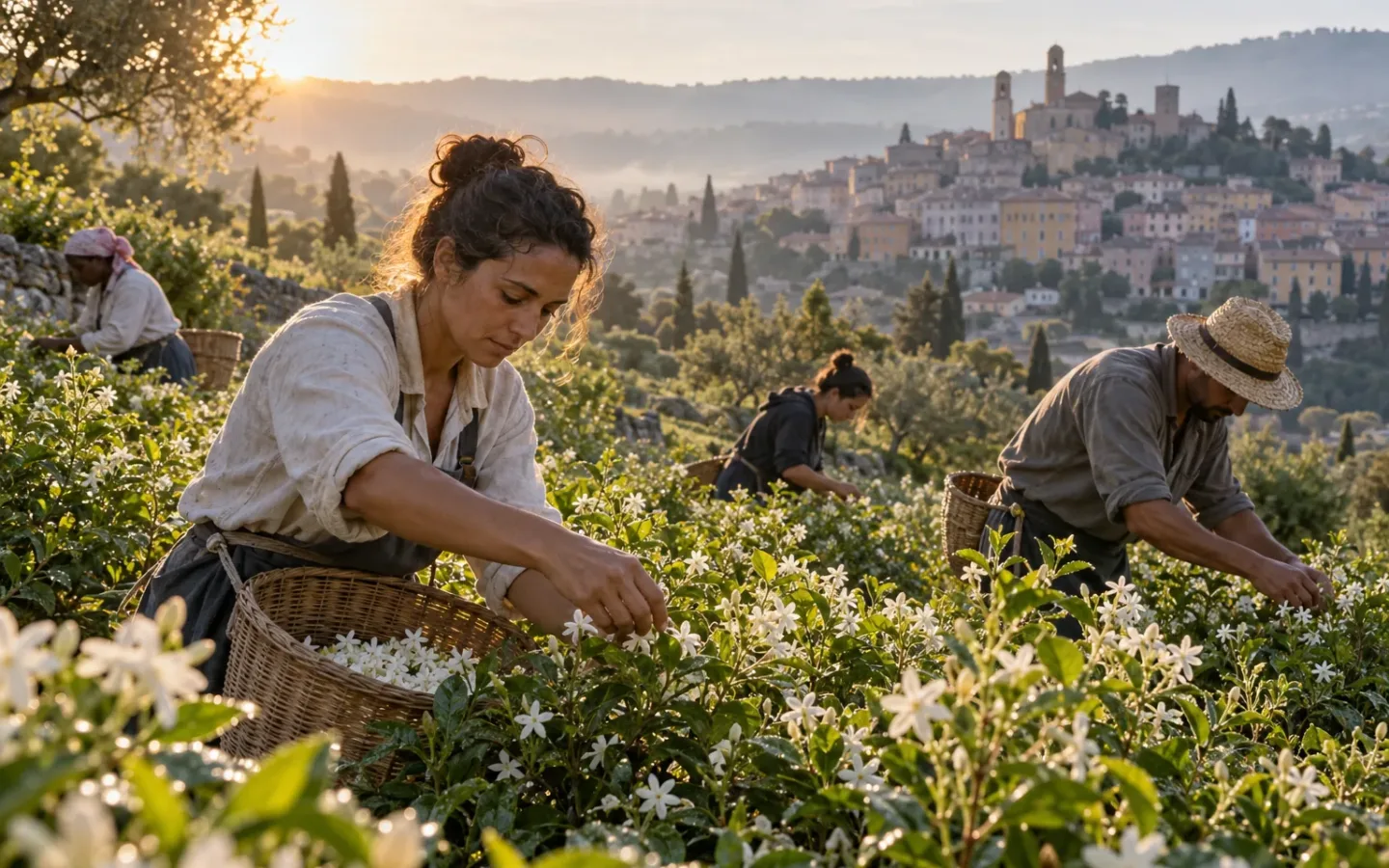
Grasse has not only become important because jasmine and roses bloom on its hills. Its role came from the link between three competencies: cultivating fragrant plants, transforming natural raw materials and composing fragrances. UNESCO recognized this ensemble as an intangible cultural heritage in 2018.
The flower is the beginning, not the whole system
Climate and territory favored crops, but the differential grew with farmers, technicians, merchants and breeders working in close proximity. A harvested flower needs to be processed quickly and knowledgeably. The smell of the field only enters the jar after crossing a chain of decisions.
From perfumed leather to raw material
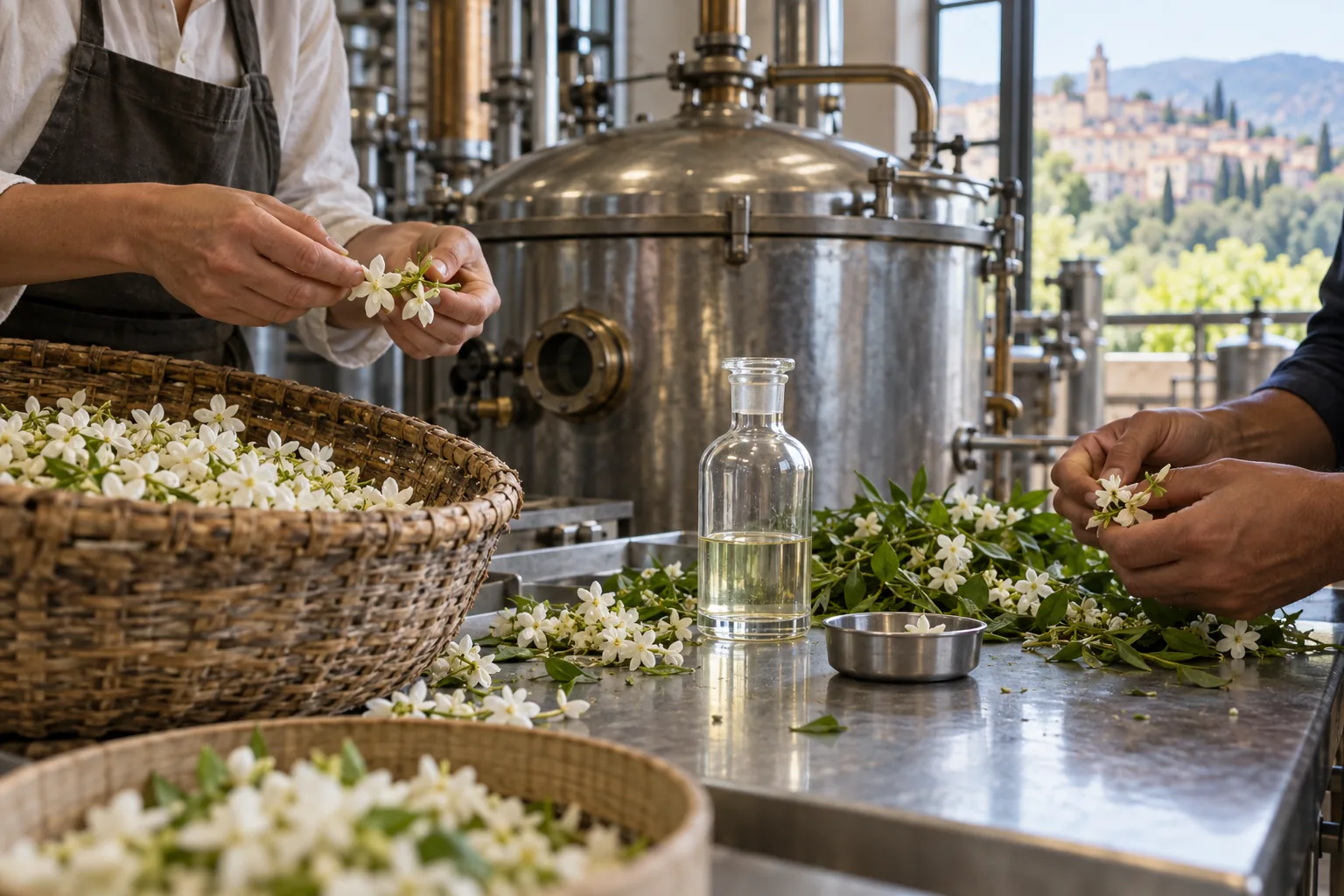
The traditional narrative links Grasse to the production of perfumed gloves and leathers. Over time, the city specialized in the treatment of flowers and other aromatic materials. At the beginning of the twentieth century, according to the Museum of Grasse, its industry occupied a dominant position in the processing of natural products for perfumery.
A capital that also needed to change
Globalization, urban expansion, and agricultural costs have reduced local crops. The museum itself records that areas of jasmine migrated to Egypt and India. Still, partnerships preserve rose centifolia productions and other knowledge. Grasse remains relevant because its identity does not fit only in planted hectares.
What it changes when reading a perfume
"De Grasse" can indicate cultivation, processing, creation or just symbolic association. Try to find out what the concrete link is before treating the name as an automatic seal of quality. Origin matters; transparency about origin matters even more.