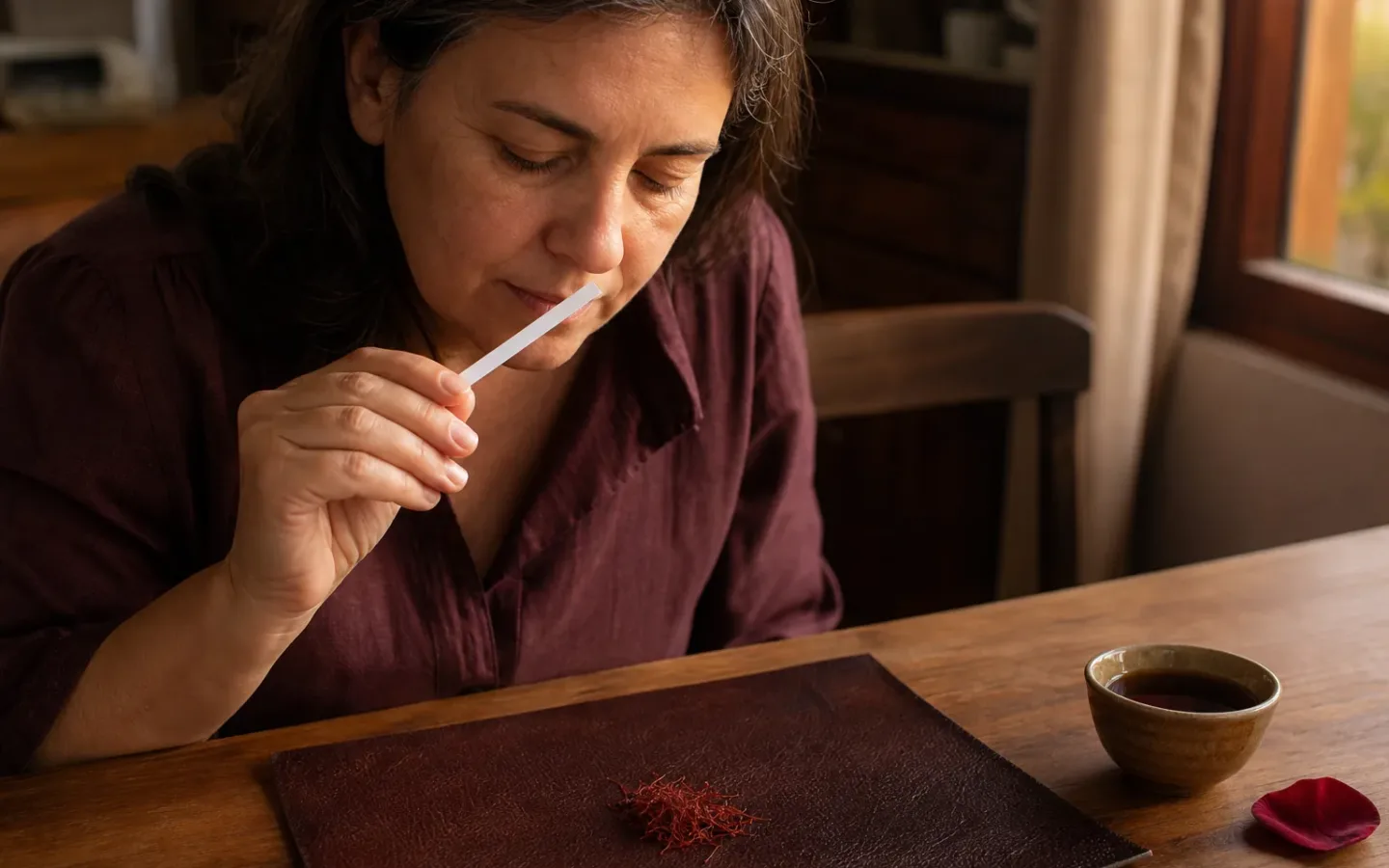
Open a small leather box near threads of saffron. Add dried tobacco and a dark rose. Safraleine circles this scene—though it's a molecule, not an extract of these materials.
Givaudan describes it as warm, vibrant, spicy, woody, and leathery. Its complexity includes tobacco facets, reminders of natural saffron, and a floral aspect close to rose ketones.
Kitchen saffron is just a clue
Natural saffron has a complex odor: dry, slightly medicinal, earthy, and leathery for some noses. Safraleine captures and rearranges some of this imagery.
Because of this, a pyramid can list "saffron" without the perfume using the spice as a direct raw material. The word can also describe a chord built with molecules.
Animal-free leather
There is no leather tree, and many leathery accords are assembled by the combination of smoky, phenolic, woody, and spicy materials. Safraleine offers a modern way to bring warmth and tension to this ensemble.
It can darken roses, dry fruits, give relief to wood, and bring a perfume closer to tobacco. Launched by Givaudan in 2007, it shows how a new molecule can converse with old references.
Start in the pantry
If you have real turmeric at home, smell a few dry strands without rubbing it on your nose. Compare it to clean leather and black tea. Then try a perfume that declares turmeric or leather.
Don't expect equivalence. Look for the common zone: dry heat, spice, shade and a medicinal tip. The nose learns when it finds relationships, not just copies.