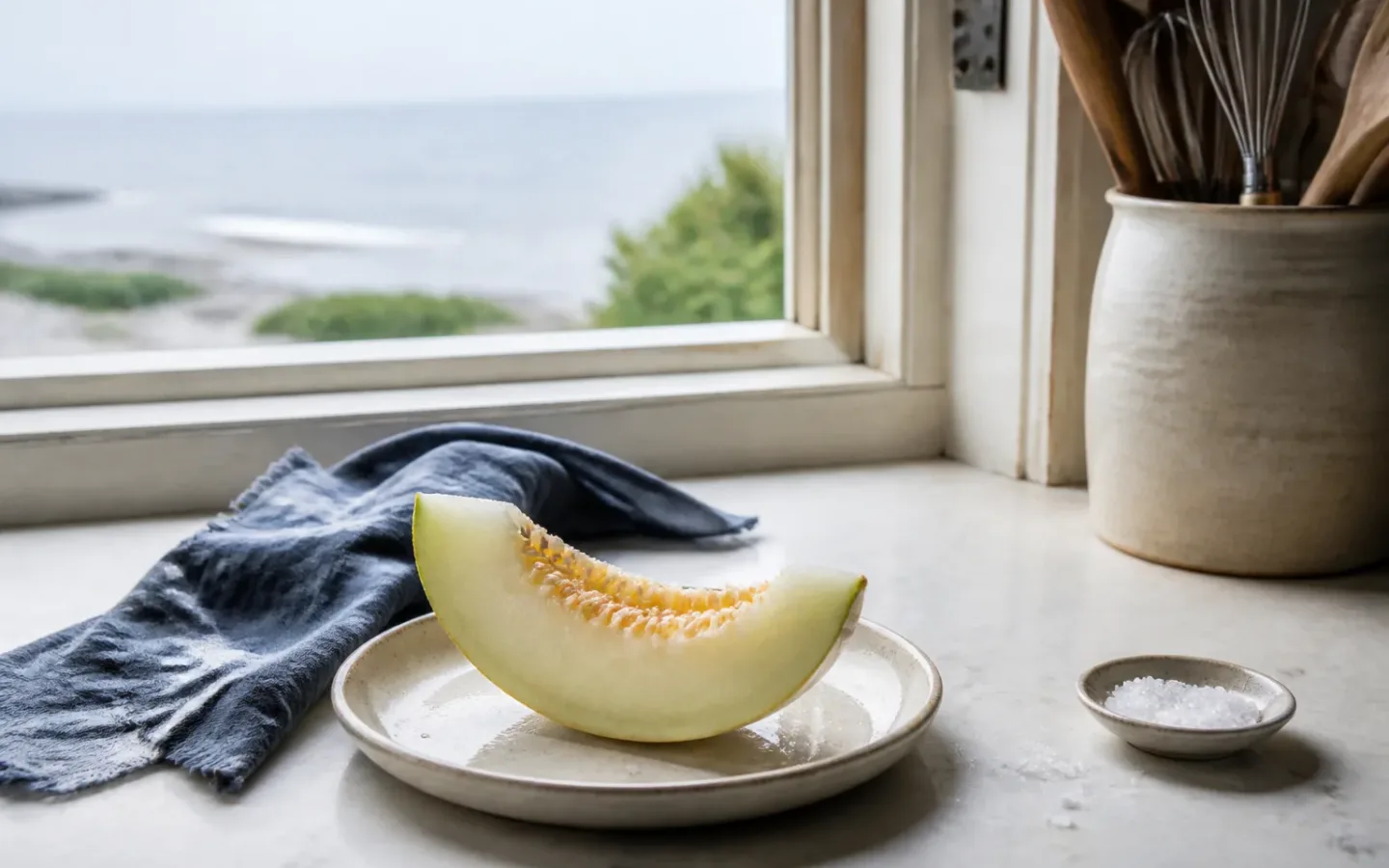
The sea doesn't smell like Calone. Even so, during the 1990s, this molecule helped millions of people imagine blue water inside a bottle.
Its profile brings together marine and ozonic notes with a fruity side that may be reminiscent of melon or watermelon rind. dsm-firmenich describes it as one of the first aqueous molecules in the industry and links its diffusion to the emergence of the marine trend of that decade.
A landscape created, not extracted
There is no such thing as an essential oil of the ocean. The beach is a mixture of salt, algae, moist air, sunscreen, sand and memory. Aquatic perfumery was born from chords capable of suggesting this set without literally copying it.
Calone offered a powerful shortcut. With citrus, transparent flowers, herbs and light woods, it helped to draw freshness, space and imagined water.
Why Some People Feel Melon
The fruity facet is a recognizable part of her signature. In certain formulas, she looks juicy; in others, more salty or floral. Dose and combination decide whether the scene resembles coastline, rain, or a freshly cut fruit.
This information changes the way aquatic perfumes are tested. When a "navy" looks slightly sweet and fruity, it doesn't mean that your nose missed. Perhaps it has found an important piece of the accord.
Change the water
Compare an aquatic perfume from the 1990s with a more recent marine creation. Use ribbons and wait at least 20 minutes. Write down salt, melon, ozone, wood, seaweed, and minerality.
You'll realize that "aquatic" isn't a single smell. Calone opened a door; the perfumery went on to build many landscapes after her.